
When Feeling Good Feels Unsafe
January 14, 2026
by Sara Raymond
Sometimes peace can feel surprisingly uncomfortable.
When life gets quiet, when love feels steady, when success arrives without struggle, there’s a subtle tension that creeps in. It might show up as restlessness, worry, or the sudden urge to fix something that isn’t broken.
You may even hear yourself thinking, this is too good to last.
That impulse to retreat from goodness isn’t sabotage. It’s not proof that you’re broken or incapable of joy. More often, it’s your body’s learned confusion between safety and familiarity.
The Nervous System’s Memory of Struggle
Our nervous system doesn’t distinguish between what’s “good” and “bad,” it simply recognizes what’s known. If you grew up in an environment where tension, unpredictability, or stress were constants, then calm might feel foreign.
When peace finally arrives, your body doesn’t always exhale. Sometimes it braces.
That’s because your system learned that comfort can be followed by chaos and that ease might mean the next disruption is near. Even though your mind longs for peace, your body may still associate alertness with safety.
It’s not that you fear happiness itself. You fear the vulnerability that comes with it, the open-heartedness that feels less defended, less prepared.
Why the Body Pulls Back
In moments of expansion, such as a deep connection, a creative breakthrough, or an emotional release, your system may register the unfamiliar sensation as danger. It activates old protective patterns: distraction, withdrawal, self-criticism, overthinking, even fatigue.
To the untrained eye, it may look like self-sabotage. But what’s really happening is that your body is trying to keep you alive in the only way it knows how.
This realization changes everything. Because the moment you stop blaming yourself for retreating, you can begin to relate to those protective parts with compassion instead of frustration.
Reconditioning the Body to Feel Safe in Peace
Healing isn’t about forcing yourself to stay in joy. It’s about expanding your capacity to feel good without bracing.
That expansion happens through gentle, consistent practice. Here are a few invitations to begin:
- Notice the micro-moments of goodness.
Throughout the day, pause when you feel a flicker of ease: the warmth of sunlight, the taste of your tea, the sound of laughter. Stay with it for just five extra seconds. This simple act helps your nervous system learn that pleasure can be safe and sustainable.
- Breathe when you feel the urge to pull back.
When restlessness or doubt arises in a moment of calm, take a slow, conscious breath. Let your exhale be longer than your inhale. This small pattern tells the body: We are not in danger right now.
- Anchor goodness in the body.
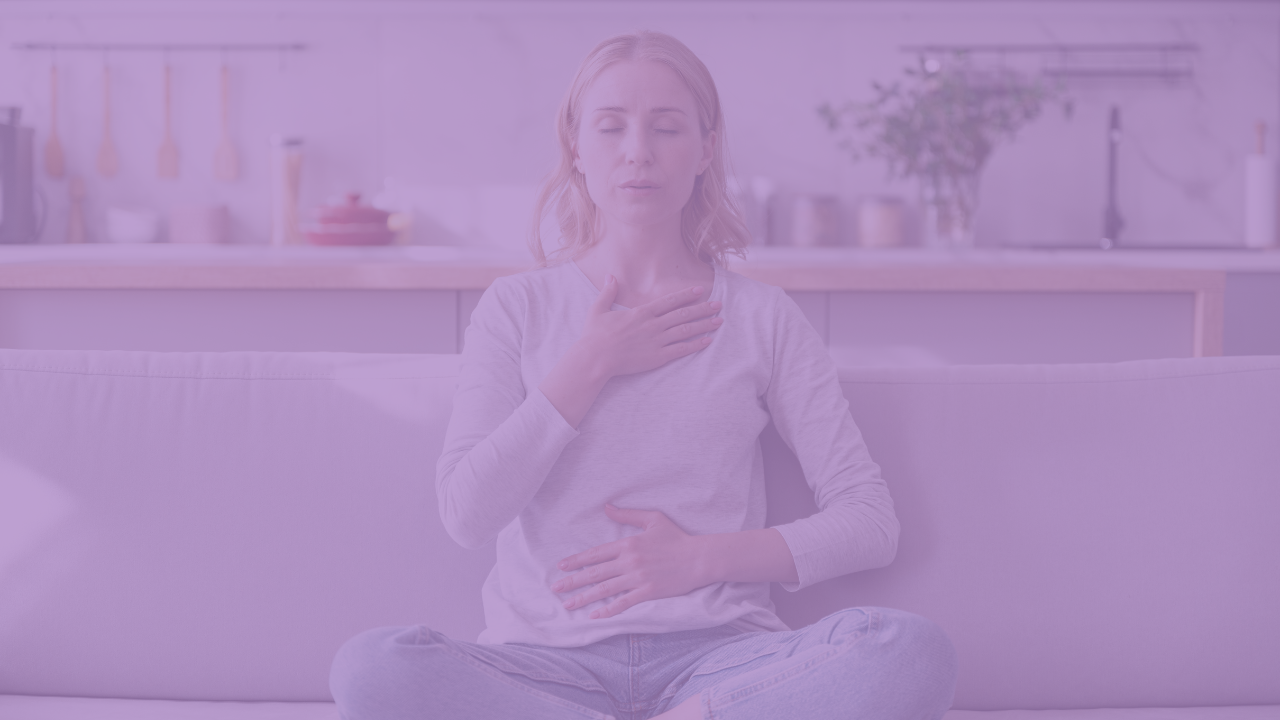
Place a hand over your heart or on your abdomen and silently say, “It’s safe to feel good.” Repeat it often, not as an affirmation to force, but as a gentle reminder that your body is learning a new language.
These practices are not about chasing joy. They’re about teaching your system that you can stay open when life softens.
From Survival to Safety
It takes time for the body to trust stillness. In trauma recovery, this process is sometimes called pendulation. It is gently moving between comfort and discomfort, safety and growth, until your system learns it won’t be overwhelmed.
You can think of it like teaching a skittish animal that your outstretched hand is safe. At first, it flinches. But with calm repetition, it learns to approach without fear.
Your nervous system works the same way. With each experience of safety you allow yourself to stay in, no matter how brief, you build new neural associations. You rewire your body to recognize peace as familiar.
When you notice yourself pulling away from something good, a relationship, a moment of calm, a compliment, pause.
Instead of judging the reaction, try saying quietly to yourself: This is new. And new can feel scary. But I am safe enough to stay present.
That single phrase carries the energy of transformation. It honors the old pattern while inviting a new one.
The more you practice this, the longer you’ll be able to remain in states of peace, connection, and joy without shrinking back. And in time, feeling good won’t feel unsafe anymore.
May you learn, breath by breath, that peace is not a reward. It’s your natural state, one your body is remembering how to live in.


You know the feeling. There is something you need or want to do. Maybe it is an email you have been ...

How to Calm Your Nervous System: A Gentle Guided Practice
Some days, you notice the tension before ...

Have you ever had a quiet feeling that something was right for you, only to immediately question it?...
How to Practice Mindfulness When You Can’t Sit Still and Meditate
Maybe you want to meditate. You k...
Have you ever had a quiet feeling that something was right for you, even when you couldn’t explain w...
