
How to Calm Your Nervous System: A Gentle Guided Practice
Some days, you notice the tension before you notice the stress.
Your shoulders have crept toward your ears. Your jaw is working overtime. Your thoughts are already three steps ahead, and you haven’t finished your morning coffee.
When you feel overwhelmed, even the suggestion to “just relax” can sound like another assignment.
What if you began with something smaller? A gentle touch. A comfortable breath. A moment to notice the support beneath you.
In this guided practice from The Mindful Movement, Sarah Raymond brings together self-massage, gentle stretching, balanced breathing, and meditation. It’s an invitation to pause, connect with your body, and explore what helps you feel more settled.
How can you begin to feel calmer when you’re overwhelmed?
Start by finding a comfortable position, noticing where you’re holding tension, and choosing one gentle action: soften your shoulders, lightly massage your temples, or follow a few easy breaths. You don’t need to complete an entire meditation to make room for a moment of care.
Sarah’s practice offers several ways to begin. You can follow the full session or return to the part that feels most supportive today.
There is no prize for doing every movement perfectly. Your body gets a vote.
1. Get comfortable before you begin
Choose a chair, cushion, or spot on the floor where you can sit comfortably. Let your spine be upright without making yourself rigid.
You can keep your eyes open, soften your gaze, or close them if that feels comfortable.
Before changing anything, notice what’s here.
Are you clenching your jaw? Holding your breath? Bracing your shoulders?
You don’t need to judge what you find. This is simply a check-in with yourself, something that can get lost when you’re busy checking on everyone else.
2. Explore gentle self-massage
Sarah begins with light touch around the temples, jaw, ears, and shoulders.
Try placing one or two fingertips at your temples and making small, gentle circles. Change direction, then pause to notice how it feels.
Next, bring your attention to your jaw. Use light pressure around the muscles near its hinge, gently opening and closing your mouth if comfortable.
You might also explore gentle touch around the outer ears or across the tops of your shoulders.
Keep your breathing easy. If you notice yourself holding your breath or bracing against the pressure, ease off or skip that area.
The purpose is to listen to your body. You’re welcome to spend longer somewhere that feels soothing or leave out a movement entirely.
3. Make space with comfortable stretching
After the self-massage, Sarah introduces gentle neck movements.
Begin by slowly tipping one ear toward the shoulder on that side. Keep the movement small and comfortable, then return to center before exploring the other side.
Notice whether the two sides feel different. They don’t have to match.
You can add an easy sigh or a soft hum as you breathe out, if that feels good. Let your shoulders relax between movements.
Avoid forcing a stretch or pushing through pain. You can also stay still and simply notice your breath.
Sometimes, giving yourself permission to do less is the most useful part of the practice.
4. Let your breathing find an even rhythm
For the meditation, remain seated or lie down if that would feel more supportive.
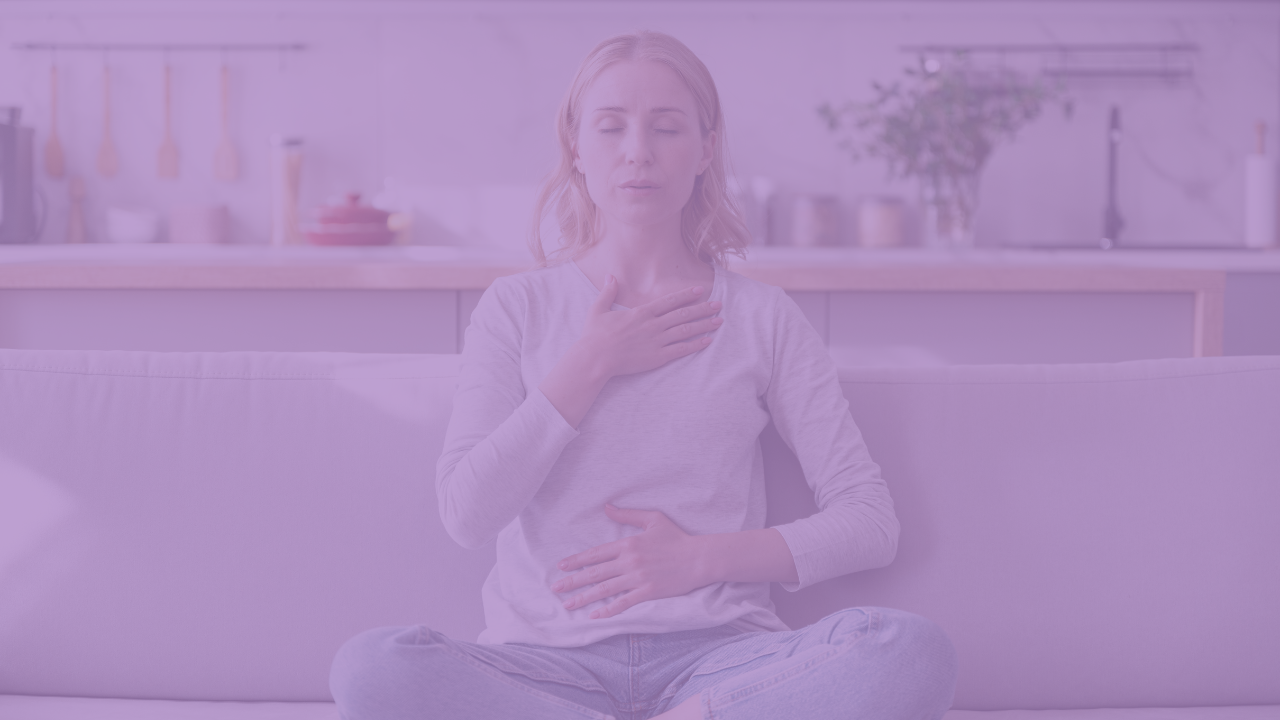
Place one hand on your heart and the other on your belly, allowing your elbows to rest comfortably.
Sarah invites a balanced breath: an inhale and an exhale of equal length.
You might breathe in for a comfortable count of three and breathe out for three. Choose a pace that feels easy, without straining or holding your breath. If counting feels distracting, return to your natural breathing.
Let your hands notice the gentle movement beneath them.
There’s nothing to perform here. You’re giving your attention somewhere simple to rest.
5. Notice support in the present moment
As the meditation continues, Sarah invites you to notice signs of support around you.
Feel the chair, bed, or floor beneath your body. Notice the air against your skin. Listen to the sounds nearby.
The practice also includes the phrases:
I am safe.
I am loved.
Use them if they feel supportive and true for you. You can also choose a phrase such as, “I am here,” or, “I can offer myself kindness.”
If your mind wanders, gently return to a sensation, a sound, or your breath. Wandering thoughts don’t mean you’ve done anything wrong.
What if you only have a minute?
Choose one part of the practice.
Lightly massage your temples. Relax your shoulders. Feel your feet resting on the floor. Take a few comfortable breaths.
A short pause still counts. You don’t have to wait until your schedule clears or you reach the end of your energy to care for yourself.
Give yourself a softer place to begin
Before finishing, notice one area of your body that feels comfortable or at ease. It can be small.
Then take a moment to appreciate that you showed up for yourself.
You may feel a shift, or you may simply have spent a few minutes listening. Either way, there is room to meet your experience with kindness.
What is your body asking for right now: a little movement, a little stillness, or a moment to breathe?


How to Calm Your Nervous System: A Gentle Guided Practice
Some days, you notice the tension before ...

Have you ever had a quiet feeling that something was right for you, only to immediately question it?...
How to Practice Mindfulness When You Can’t Sit Still and Meditate
Maybe you want to meditate. You k...
Have you ever had a quiet feeling that something was right for you, even when you couldn’t explain w...

What if some of the behaviors you’ve always considered part of your personality aren’t actually fixe...
